Depending upon the circumstances, one year can be a long period of time.
One year spent waiting through, say, a traffic light or watching a year’s worth of early-90s Cavs highlights? That’s an eternity.
But watching one year of your life go by without your favorite basketball team? That can transpire rather quickly.
As a writer for a web site nominally devoted to a team which no longer exists, I suppose it is incumbent upon me to spill some pixel-filled pearls of wisdom about how it feels one year after Greg Nickels made a deal with the devil and allowed Clay Bennett to leave town for what turns out to be the tidy sum of $45 million.
It was, obviously, a painful day for all of us when the announcement was made. Speaking as someone who hasn’t lived in Seattle since the (first) Bush administration, though, I almost feel guilty about complaining – after all, how can I grouse about somebody leaving Seattle when I did it more than 15 years ago?
Regardless, this situation transcends individual situations, it transcends even city-wide feelings. Instead, I look at what happened to Seattle and the Sonics as a searchlight beaming directly onto the professional sports experience, and that’s precisely why it should trouble everyone, from the season-ticket holder in New Jersey to the casual fan in New Orleans.
In the aftermath of the relocation, I was a bit irked at the way the rest of the sports fans across the country viewed the way events transpired. For the most part, the prevailing sentiments fell into one of two camps:
A) “Hey, if you guys wanted your team so bad, you should have supported them better.”
B) “That really sucks for Seattle, we should do something about … hey, how ‘bout those Cavs, can you believe LeBron?”
Naturally, that bothered me. Where was the outrage? This wasn’t the Hornets leaving Charlotte, or the Grizzlies leaving Vancouver, this was the Sonics leaving Seattle. We mattered more. We had a history, dammit! Why wasn’t everyone as angry as we were?
For quite a few months, I lugged that emotion around with me, so much so that I began to wish that the league would just collapse so that everyone else would feel as crappy as I did. Then, slowly, I began to realize that the way other fans treated the Sonics’ departure was no different than the way I treated the Colts’ departure from Baltimore, or the Browns’ from Cleveland, or any of the myriad of other franchise shifts in the past twenty years.
That is to say, with a small bit of melancholy and a great big helping of indifference.
And you know what? I can’t expect any more than that.
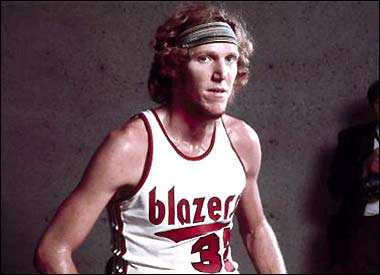
One year later, and I still despise Stern, McClendon, Bennett, and the rest of the co-conspirators for the shoddy way they treated the fanbase here. When word came that the Blazers were mulling the possibility of playing a pre-season game in Seattle this fall, I almost threw up. Really, Portland, you think after one year that we’re ready to forget the past 40 years? That I can start cheering for a franchise that considers this guy a hero? I think not, my patchuli-scented friends.
But the truth is that I am not the target audience for the Blazers’ marketing scheme, any more than I am for the NBA. The target is the casual fan, the one who only dips his toe in the league’s pool when he feels like it, who can take or leave basketball with the ease of trying the new restaurant on the corner.
One year later, and I have finally come to the realization that the league cares as much about devoted fans as Hollywood cares about the hard-core fanatics who love their product. We are a loyal entity, a group who remain devoted no manner how shoddily we are treated.
Imagine if a local business treated you the way the NBA treated Seattle fans. After 40 years of devotion, after setting attendance records, after building two arenas, after caving in to every demand the league/team placed, they threatened to leave because of a lack of support. Can you imagine how you would feel about a local theater that tried to do that? A restaurant?
You can’t, of course, because the NBA – and pro sports in general – are a different animal, and they know it. Stern knows we are addicted to his product, and he knows no matter how poorly his teams behave towards their hosts, no matter how greedy his owners act or how egregious their demands, that there are always those who will forgive them, simply because they love the game.
One year later, and most of the anger has ebbed. And while I’ve grown to understand why the majority of population takes a not-my-problem attitude towards what happens in other cities, let me offer a few words of advice:
You’re next.