Wednesday, September 14

Name That Sonic: Lumberjack Division


Can you name this hirsute Seattle Sonic from years gone by? I've obscured the jersey number just to make it less than completely obvious.

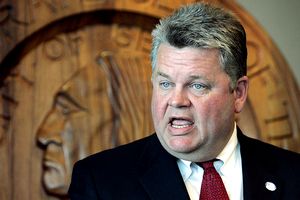
Tacoma Sonics? Oh, Please

The Tacoma City Council, seemingly intent on getting their names in the newspaper this week, have put out the question: What would it take to make the Tacoma Dome an acceptable arena for either the NHL or the NBA?

Of course, the correct answer is lots of strippers, but the council isn't interested in that, they're more interested in how much money it would take to get the 29-year-old building into something resembling pro-sports-ready status. $45 million? $145 million? $3.1 billion?

Anyone with a nickel's worth of common sense would tell you that there is no way 17,000 people are going to make the drive down I-5 at 6:30 to watch a basketball game (Anyone out there remember what it was like in 1994-95? Care to re-enact that fiasco? I didn't think so.).

And that's what it boils down to. It's conceivable that the NHL would give it a look, but even that's pushing it. Any professional sports team in this region that wants to be successful is going to need to draw people from the greater Seattle area, which means either a team in downtown or on the eastside, not Tacoma, no how matter how much money they put into renovating the Tacoma Dome.

(via Bellingham Herald)

Tuesday, September 13

Sonic Library: This Game's the Best


No team in Sonics history received more attention than the mercurial Payton/Kemp team of the 1990s.

Despite the fact they never earned a championship, that team had no fewer than four books written about it which, combined with the fact that the teenagers that followed that crazy bunch religiously are now in their 20s and 30s (and, gulp, 40s), means the Reign Man and the Glove will forever be in our consciousness.

Three of the four books, Full Court Pressure, Black Planet, and Men of Steal, focused mainly on the players, but one of them, This Game’s the Best turns its spotlight on the third performer in Seattle’s three-ring circus: George Karl.

Karl, who penned the book with Don Yaeger, comes off as nothing more than a curmudgeon who hates everything about the NBA except for the basketball itself, and he’s not thrilled with that bit all that much either.

This Game’s the Best goes into great detail about Karl’s life, from boyhood in Pennsylvania to somewhat-stardom at North Carolina to his (brief) career as an ABA guard to his years bouncing back and forth between the CBA, NBA and Europe as a head coach, all of which make for fantastic reading. Karl was (is) famous for his unvarnished opinions, and there aren’t too many members of the coaching fraternity who would on one of their brothers, as Karl does with Pat Riley:

“This is a game of hard work, of teamwork, of discipline, of commitment. It is more a daily attitude. But to listen to Pat Riley, he represents himself as if he’s smarter than we, the other coaches, are. I resent that.”

Opinions like that make Karl’s book enjoyable, but to turn his “call it like I see it” mantra on its head, this book is not well written. Checking in at close to 250 pages in paperback form, it is a double-spaced miasma of whininess, with only blankness staring at you between the lines.

There is no subtleness to This Game, no surprise considering whose name is in 100 point type on the front cover. Karl’s naivete when it comes to the complicated world of NBA basketball is refreshing in bursts and infuriating in others. On superagent David Falk in specific, and NBA players in general:

“I’m not sure what he’s doing is good for the long-term health of the league though. I have always had a question about David and his work with the players’ union: Why do a bunch of multimillionaires need a union anyway?”

The very fact that without a union they wouldn’t be multimillionaires is lost on Karl, and his obliviousness to the poor relationship between owners and players is further underlined a few sentences later with this bon mot:

“I do not think the owners are in it to hurt the players.”

Sigh.

When he isn’t busy condemning greedy players on other teams, Karl takes care to insult his own players, from Kendall Gill to Michael Cage to Gary Payton. Don’t get me wrong, it’s not a hatchet job, and Karl repeatedly praises players when they put the team first. Still, the reader, after hearing page after page of criticisms and complaints, can hardly be forgiven for thinking he has become a member of the Sonics or Bucks or Warriors or Cavaliers in the waning days of Karl’s runs with those respective teams. Yes, George, we get it, today’s players don’t want it the way you did when you were playing, just the same way old players on your San Antonio teams probably whined about the way you didn’t it want it, and the way players on the … well, you get the picture. Old fogies complaining about young bucks (or Bucks) not “wanting it” or “putting the team first” has been going on so long as sports have been around, and Karl is hardly the first or the last to use those clichés. However, the fact others have trodden down that path so many times before doesn’t make his complaints entertaining; it makes them boring.

Thanks to Karl’s humor and honesty, though, there are some wonderful passages interspersed within the doggerel, one of which speaks directly to the man’s way of thinking.

In the late 80s Karl had given up any hope of becoming an NBA head coach. After stints with Golden State and Cleveland ended in frustration, Karl, while still young, figured he would never be given another shot and so headed for Spain with Real Madrid. His first foray was successful, and when Real offered him a chance to coach the team again, Karl gladly accepted. No fool, the boy from Pennsylvania was ready for Europe this time:

“When we were headed to Madrid the second time, we believed we would be there for several years so we shipped over more than four thousand pounds of household goods and food. You always take food when you go to Spain. They do not have Cheerios or Oreos or cake mixes of Hamburger Helper or any of those kinds of things. So we took all that stuff with us.”

It’s a delightful, biographical paragraph. Analyze it with me: Here you have a man, headed to one of the culinary capitals of the world, where good wine costs less than Coca-Cola, where vendors sell delicious tapas for next to nothing, where he has an opportunity to soak up a wonderful culture and its wonderful cuisine, and what does he do?

He ships a container of Hamburger Helper across the Atlantic Ocean.

To anyone else, it would be an embarrassing episode of your life you’d never tell anyone about. But to George Karl, it’s just being honest. The man wanted to eat Cheerios for breakfast, have a sandwich with Oreos for lunch, and Hamburger Helper for dinner, and he wasn’t about to be denied that just because Spaniards have some weird fascination with eating freshly prepared food.

You could read all 258 pages of This Game’s the Best to try to figure out George Karl, or you could just remember that anecdote. Either way, you’d know the man.

The Seattle Supersonics return! (to Safeco?)


In case you missed Sonics Celebration night at Safeco Field a couple months back, here are the highlights courtesy of our pals at Sonicsgate.

Thursday, September 8

Kemp Blows Up Bumbershoot

The Reign Man can still bring the house down at the Key.

Local rapper Macklemore brought Shawn Kemp on stage during his set at Bumbershoot last weekend. Check out the response from the crowd.

Saturday, August 27

The Fish That Saved Seattle

In 1979, the Seattle Supersonics were world champs . . . in this world, anyway.

That same year, in an alternative universe, the Pittsburgh Pisces also won a basketball championship. High-flying Moses Guthrie (who looked a lot like Dr. J), led a goofy band of oddballs to the promised land with the help of Stockard Channing and her astrology charts.

The Sonics may be gone (for now!), but we'll always have the Pittsburgh Pisces thanks to their unofficially official fan page on Facebook. And if you don't know what the hell I'm talking about, just watch the video below, then order The Fish That Saved Pittsburgh on DVD.

Tuesday, August 23

Kemp and Payton return!

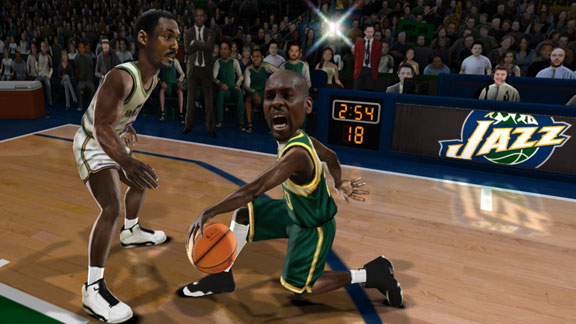
They did always say Gary had a big head. 


The Seattle Supersonics are returning to the NBA . . . well, NBA Jam at least.
So when EA Sports announced the return of "NBA Jam" to consoles last year, old school gamers like myself couldn't wait to get our hands back on "Glove" and "Reign Man" for one last leap through the rafters. Only problem was, due to licensing issues, Kemp and Payton weren't included as legends in the game, causing much frustration and outrage among all the die-hard Sonic fans out there. Thankfully for gamers (and everyone else out there looking for more alleys and less oops), EA Sports and the NBA worked out their differences, and the team of Gary Payton and Shawn Kemp will be included in the upcoming downloadable title, "NBA Jam: On Fire Edition" for the PlayStation 3 and Xbox 360. "This is an important day for 'Jam' fans," says "NBA Jam's" creative director, Trey Smith. "We tried to get this Sonics team last year but it didn't quite pan out. And this is something the fans were screaming for. This was at the top of their list, and that's a big deal to us. When we were creating 'NBA Jam: On Fire Edition' we wanted to listen to the fans, and everyone who played the game last year had one question: Where are the Sonics. "They are the quintessential one-two punch in 'Jam,' and if I'm playing hyper-competitively, this is how I roll."
Read the rest of the story at ESPN.com

Friday, August 12

Worst Sports Owners

If you're still looking for a pound of flesh from a former owner of the Sonics, you might want to visit Athlon Sports for their Worst Sports Owner Tournament.

No, it's not Clay Bennett, it's Howard "Five-Year Plan" Schultz. Schultz, unfortunately, is in a tough bracket as he's matched up with James Dolan in a four vs. five seed contest. Whomever emerges will take on the winner of the Donald Sterling/Maloofs matchup.

Hey, when you're miserable excuse for an owner, you can't expect easy matchups, right?

Wednesday, August 10

Kemp Chats at Times Today (Now with Bonus Updates!)


Fresh off his appearance at Safeco Field last weekend, Shawn Kemp is once again in the spotlight, this time taking questions via a Seattle Times chat. You can submit your questions here. You know the censors are going to be working fast and furious to keep the snarkier questions at bay.

UPDATE:

-Kemp's pick as the guest he'd most like to have walk through the doors at Oskar's Kitchen (Shawn's Seattle restaurant) ... Drew Carey (?!). Would not have guessed that in 137 years.

-Kemp's pick as his favorite player to watch in today's NBA ... Kevin Love.

Um, is it me, or does it seem like Steve Scheffler was sitting in for parts of the talk today?

Tuesday, August 2

The Sonics, Bob McAdoo, and What If?

I touched briefly on this in the review of What’s Happenin’?, but it bears repeating I think:

In the winter of 1976, the Seattle Sonics almost traded for Bob McAdoo.

And when I mean almost, I don’t mean “some hobo on a message board proposed dealing a fourth-rounder and Mike Bantom for McAdoo,” I mean the Seattle Times ran this banner headline:

Sonics Get McAdoo

Essentially, the deal was this: Seattle sent center Tom Burleson, forward Leonard Gray, and a sum of cash believed to be around $1 million to Buffalo for McAdoo and center Tom McMillen.

McMillen was another cash savings for the Braves, (he earned $200,000 a season). McAdoo, meanwhile, was expected to leave as a free agent at the end of the season, so the Braves and their new owner, John Y. Brown, figured it best to get something before he was gone.

Remember, Burleson was 7’2”, 24 years old, two years removed from being the #3 overall pick in the draft, and averaged 16 points and 9 boards the previous season– he wasn’t chump change. Gray, a bulldog power forward now long-forgotten by Sonic fans, was a strong contributor as well, although his NBA career ended abruptly at the end of the 1977 season.

So, digest all of that, as well as the fact that McMillen’s career, like McAdoo’s, lasted until the mid-1980s, and ask yourself: Would this have been a good deal for the Sonics?

Initially, the answer is an unequivocal YES. I’ll put it in the simplest terms possible; Burleson and Gray, the Sonics’ end of the deal, combined to score 1,285 points in their careers after the “trade.” McAdoo scored 2,097.

In 1978.

It’s not even close. McAdoo had led the league in scoring for three years running, would make the all star team five consecutive seasons, was two years removed from the NBA MVP Award, finished in the top ten in voting four times and in the top three in voting three times, ranked in the top ten in blocks, points, free throws, rebounds, and pretty much everything you could imagine.

Then you’ve got McMillen, a backup center who emerged as a key member of the 1979 Atlanta club that came within a whisker of knocking the Bullets out of the playoffs. By himself, McMillen would have been a good return for Gray and Burleson, but when you add in McAdoo, it’s no contest.

Of course, you’ve got to think about roster construction when something like this happens, and how the dominoes fall after you start tinkering with things. The secondary question you have to ask is, naturally, how would the McAdoo trade have impacted the Sonics’ run to the NBA Finals in 1978 and subsequent championship in 1979? It’s great to get a superstar, but if adding McAdoo means foregoing the glory of 1979, would it have been worth it?

The running backstory to all of this is the fact that Bill Russell was on his way out of Seattle and Lenny Wilkens on his way in. Would Russell still have left if McAdoo had arrived in January 1977? I’d hazard that the answer would be yes, simply because Russell and the NBA needed a break from one another.

And if Russell leaves, that means Lenny Wilkens comes to town, which means the NBA Finals runs Seattle made in consecutive seasons are still in play. With Wilkens in the front office and Bob Hopkins on the floor, here’s your roster (for the sake of argument, I’m releasing or trading the players Wilkens released or traded in the fall of 1977):

Tom McMillen, Bob McAdoo, Dennis Johnson, Slick Watts, Fred Brown, Bruce Seals, Jack Sikma, Joe Hassett

Of course, with McAdoo and McMillen on the roster, the Sonics might have opted to go with a choice other than Sikma in the draft, perhaps a forward such as Ernie Grunfeld or Cedric Maxwell. But the Sonics did love Sikma’s potential, and maybe as insurance for McMillen they might’ve still opted for the beanpole from Illinois Wesleyan. With Wilkens’ ties to Providence, I’m guessing Hassett still gets picked regardless of our alternative-universe scenario.

So far, so good then. The McAdoo trade hasn’t caused any rips in the fabric. There are eight guys on the roster, but some more moves are needed to round out the roster. Fortunately, acquiring McAdoo doesn’t preclude the Sonics from acquiring Gus Williams, so you can add him to the roster as a free agent from Golden State (although, to be fair to Sam Schulman’s wallet, McAdoo’s sizeable salary may cause some problems). And, John Johnson could still be picked up from Cleveland for a pair of second rounders. And, sadly, the Sonics could still surrender a first- and second-rounder to Portland to get Wally Walker, thus ensuring Shawn Kemp’s eventual departure from the city 20 years later.

Soon after, Wilkens could deal Watts to New Orleans for a future draft pick, and thereby close the book on the transactions for our hypothetical Supersonics. What does it all mean, then? Well, here’s the roster(s):

REAL SONICS – FAKE SONICS
Starters:
Webster – C –Sikma
Sikma – PF –McAdoo
J. Johnson – SF – J. Johnson
D. Johnson – SG – D. Johnson
Williams – SG – Williams

Bench:
Brown – Brown
Silas – McMillen
Walker – Walker
Seals – Seals
Hassett – Hassett

Essentially, we’ve got three big changes:

1. Jack Sikma replaces Marvin Webster as starting center
2. Bob McAdoo replaces Sikma as starting power forward
3. Tom McMillen replaces Paul Silas as big man off the bench

Without Burleson, you see, the Sonics would be unable to deal the 7’2” center to Denver for Silas, Webster, and Willie Wise. It’s difficult to say what impact those three changes would have had on the club. On the one hand, Marvin Webster was an indispensable component of the ’78 club’s run to the Finals. He led the club in minutes, rebounds (by more than 100 over Silas), blocks (more than twice as many as anyone else), and field goal percentage. It is entirely fair to say that without Marvin Webster’s performance the Sonics do not reach the NBA Finals.

Further, no Webster means no Lonnie Shelton, as Webster’s departure to New York in the subsequent offseason brought Shelton in return, who would prove to be a crucial part of the ’79 championship. (Or Vinnie Johnson, for that matter, whom the Sonics also picked up in the Webster signing … and then let go to Detroit for Greg Kelser. Darn.)

However, Sikma emerged in ’78 and ’79 as a terrific player, albeit one without the defensive bona fides of Webster or Shelton (or Silas, for that matter). With McAdoo and Sikma patrolling the lanes, we suddenly have two terrific offensive players, but no sizeable defensive presence. Granted, McMillen was a big guy, but his numbers do not indicate he was anywhere near the intimidating factor Silas, Shelton, or Webster were.

In essence, by acquiring McAdoo, the Sonics would have completely altered the personality of the team that reached consecutive NBA Finals, adding one of the league’s premiere offensive talents but sacrificing the fantastic, defense-oriented club with which an entire region fell in love. The fact the Sonics felt they needed something more than Sikma in the post is underscored by the acquisitions of Tom LaGarde, Lars Hansen, Dennis Awtrey, and Shelton in the offseason, and that was WITH Paul Silas on the roster. Even more troubling is the fact that both McAdoo and Sikma were more jumper-oriented big men, and forcing one of them to play in the post would have meant sacrificing their abilities.

It’s possible that McAdoo’s 25+ points a night would have been enough to offset any defensive shortcomings the McAdoo/Sikma pairing would have created, and, to be fair, McAdoo’s poor defensive reputation may have been overblown simply because of his greatness on the offensive end. After all, he did block a large number of shots, and picked up more than his fair share of steals. Would it have been enough, though, to offset the presence of Webster or Silas or Shelton?

The observer can’t help but conclude in the negative. While that trio of players never had the renown of the great Bob McAdoo, they still played a crucial role in the formation of the greatest team in Sonics’ history and without them there are no championship trophies.