Here's a trivia question you can use to stump your friends the next time you're hanging out at Oskar's:
Can you name the six players who have held the title as all-time leading scorer in Sonic history?
(Answer below. Also, a sidebar: Assume for the sake of brevity that the all-time leading scorer race commenced at the end of the inaugural 1968-69 season; otherwise, we wind up with a dozen guys from the first season jockeying for first place and it becomes a jumbled mess).
To help you in your decision-making, recall that on Feb. 26, 1978, Fred Brown became the leading scorer in Sonic history, passing Spencer Haywood's old record of 8,131 points. Brown tallied 32 points as the Sonics edged Philadelphia 99-97 in a come from behind victory.
Of note, Coach Lenny Wilkens was ejected for arguing with officials ("I guess I lost my head," the normally placid Wilkens said after the game), the first time in his career (playing and coaching) that he had ever received that dubious honor. Also of note, Philly Coach Billy Cunningham received the heave-ho as well.
Brown provided the winning score with 18 seconds left on the clock just as the 24-second clock was about to expire, helping the Sonics eliminate what had been a 16-point third quarter deficit. The Sixers had three chances to tie the game in the closing moments, but Doug Collins (!), Daryl Dawkins (!!), and Julius Erving (!!!) all came up short.
And now, in case you couldn't come up with the six, here's a handy-dandy graphic with all the details.
That's Walt Hazzard, Bob Rule, Lenny Wilkens, Spencer Haywood, Fred Brown, and Gary Payton, in case you couldn't gather from the photos.
Tuesday, February 26
Monday, February 25
Not on This Date in Seattle Sonics History, But Why Not
Everybody knows about Phil Jackson and his long-suffering back. But did you know that Jackson once missed game action because his back acted up on a bus ride from Seattle to Vancouver, BC?
I sure didn't, until I read this article in the Google news archives. In late December 1968, Jackson and the Knicks were en route from Seattle to Vancouver for a game with the Sonics (the two clubs met first in Seattle, then traveled by I-5 into Canada for a rematch the next day).
Apparently, the bus ride was too much for Jackson, sending him to the hospital (or, as they say in Canada, to hospital). It's worth noting that Jackson played in the Vancouver game, and in fact didn't miss any time until the middle of January, but his pain was enough to eventually sideline him for almost half of the 68/69 season.
I have no idea whether Jackson's now legendary back problems were around before the bus trip to Vancouver, but wouldn't it be something if that trip was what started the whole thing?
I sure didn't, until I read this article in the Google news archives. In late December 1968, Jackson and the Knicks were en route from Seattle to Vancouver for a game with the Sonics (the two clubs met first in Seattle, then traveled by I-5 into Canada for a rematch the next day).
Apparently, the bus ride was too much for Jackson, sending him to the hospital (or, as they say in Canada, to hospital). It's worth noting that Jackson played in the Vancouver game, and in fact didn't miss any time until the middle of January, but his pain was enough to eventually sideline him for almost half of the 68/69 season.
I have no idea whether Jackson's now legendary back problems were around before the bus trip to Vancouver, but wouldn't it be something if that trip was what started the whole thing?
Friday, February 22
This Date in Seattle Supersonics History: Feb. 22, 1971, Spencer v NBA
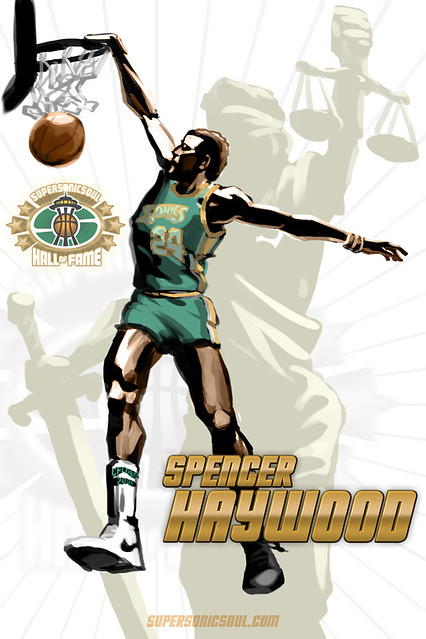
It was 32 years ago today that Spencer Haywood went from the hardcourt to the Supreme Court, one of the biggest steps in his controversial and crucial case against professional basketball.
Haywood's case has been percolating for a long time, with lower courts initially affirming his right to play. This was affirmed by the 9th US Circuit Court of Appeals on January 26th, but on February 17th, NBA Commissioner Walter Kennedy ruled that Haywood's contract with the Sonics was invalid. Thus, on February 22nd, Haywood and his legal team filed a petition with the Supreme Court so that he could continue his livelihood as a professional basketball player.
It's difficult in hindsight to appreciate how much nonsense Haywood had to go through. He was simultaneously fighting:
A) a lawsuit with the ABA's Denver Rockets, who claimed he was still under contract to them
B) a lawsuit with the NBA about whether he had the right to play before his 'four years removed from high school' bit was up
C) a petition to be able to play while (B) was being resolved
Oh, and he had to travel around the country appearing in different courthouses, as well as being physically ready to play professional basketball.
And he was all of 21 years old.
Eventually, the courts all wound up ruling in Haywood's favor, paving the way for Shawn Kemp, Moses Malone, etc. to play in the league. February 22, 1971, though, was a pivotal first step of that whole process.
(Also, it's Chunkstyle's birthday today, so join me in wishing the best artist I'll ever know a Happy Birthday. Still waiting on that Pulitzer, young man!)
Happy Birthday Dr. J
Happy birthday to the great Julius Erving. May you never lose that magic SPALDING TOUCH!!!
(Classic artwork by the equally great Jack Davis)
Thursday, February 21
This Date in Sonic History: Feb. 21, 2008: Throwing in the Towel
When I first heard about the Houston/Sacramento trade involving Thomas Robinson, I couldn't help but think of another trade involving a team expected to be relocating in the near future.
Yes, it was the Sonics, and yes, it involved Wally Szczerbiak, the rich man's Jim Farmer. (Face it, Paul, in a sexy-off between Wally World and Jim Farmer, the match would be over before the massage oils got fully warmed.)
It was February 21, 2008, and the Sonics were throwing valuables out the window at a cops-are-coming pace. The reader must remember that in mid-February 2008, the only decent offensive option for Seattle other than Kevin Durant was Szczerbiak, and by trading him the team was essentially saying that even though Szczerbiak's expiring contract was valuable, they were more interested in paring salary than anything else.
It was, of course, a logical choice to make, and one that only a team utterly disinterested in fielding a competitive team could make.
And so it was that the Sonics surrendered Szcerbiak and Delonte West and received in return, Ira Newble (!), Donyell Marshall (!!), and Adrian Griffin (!!!), who would, of course, go on to score a combined 24 points in the remainder of their collective careers.
The money quote came from Sam Presti (via USA Today), when he was asked whether the Sonics' owner's financial considerations were involved in the transaction:
"Absolutely not," Presti said. "Clay has been tremendously supportive of our decision making on the basketball side."
Wednesday, February 20
This Date in Sonic History: Feb. 20, 2003, The Glove Comes Off
Pro sports are littered with antagonistic relationships between ownership and players, and it often seems that the larger the ego for both, the greater the drama.
From Babe Ruth and Col. Jacob Ruppert to Reggie Jackson and George Steinbrenner, it doesn't take a team of researchers to find evidence of the phenomenon, and Seattle sports history is no different, and the best illustration of that difficult relationship came between two of the most important people in Sonic history: Gary Payton and Howard Schultz.
Payton - the brash point guard with the confidence of a thousand burglers - and Schultz - the self-made millionaire with the confidence of a thousand Tony Robbins - were, to say the least, not a match made in heaven. When Schultz bought the Sonics in 2001, he hoped to bring his brand of corporate branding to the NBA and his adopted hometown.
Unfortunately, Schultz never had to deal with a barista with the ego of Gary Payton.
By 2003 the marriage was a disaster. Payton's career was on the downswing, and his relationship with Schultz - if you could call it that - was even worse. Still, his popularity in the city was unparalleled in Sonic history. Even 10 years later, I can't think of a single Sonic who resonates with this town as much as Gary Payton.
When Payton boycotted the first day of training camp in protest of the lack of progress on his soon-to-be-expiring contract, the die had been cast. Still, Schultz and his management team (Rick Sund!) had, in their mind, no choice. Payton had to go. But where?
Suddenly, on February 20, 2003 - minutes before the trading deadline of 3 pm - Payton was heading to Milwaukee.
It was news that burst like a thunderclap over the Seattle sports horizon. Gary Payton ... a Buck? Even with the salve of the incoming Ray Allen to ease their pain, most Sonic fans were beyond angry at the betrayal by Schultz.
In hindsight, it was a great deal for the Sonics. Payton never reached the heights he had experienced in Seattle, and Allen was an amazing player during his tenure in Seattle.
It could be said that the beginning of the end of Sonic basketball came that grey day in February, 10 years ago. While Allen, Rashard Lewis, and company propelled the Sonics to the playoffs a few years later, the majority of his time in Seattle was mired in mediocrity, a mediocrity which helped to grease the wheels for the team's eventual departure to ...
Well, you know the rest of the story.
From Babe Ruth and Col. Jacob Ruppert to Reggie Jackson and George Steinbrenner, it doesn't take a team of researchers to find evidence of the phenomenon, and Seattle sports history is no different, and the best illustration of that difficult relationship came between two of the most important people in Sonic history: Gary Payton and Howard Schultz.
Payton - the brash point guard with the confidence of a thousand burglers - and Schultz - the self-made millionaire with the confidence of a thousand Tony Robbins - were, to say the least, not a match made in heaven. When Schultz bought the Sonics in 2001, he hoped to bring his brand of corporate branding to the NBA and his adopted hometown.
Unfortunately, Schultz never had to deal with a barista with the ego of Gary Payton.
By 2003 the marriage was a disaster. Payton's career was on the downswing, and his relationship with Schultz - if you could call it that - was even worse. Still, his popularity in the city was unparalleled in Sonic history. Even 10 years later, I can't think of a single Sonic who resonates with this town as much as Gary Payton.
When Payton boycotted the first day of training camp in protest of the lack of progress on his soon-to-be-expiring contract, the die had been cast. Still, Schultz and his management team (Rick Sund!) had, in their mind, no choice. Payton had to go. But where?Suddenly, on February 20, 2003 - minutes before the trading deadline of 3 pm - Payton was heading to Milwaukee.
It was news that burst like a thunderclap over the Seattle sports horizon. Gary Payton ... a Buck? Even with the salve of the incoming Ray Allen to ease their pain, most Sonic fans were beyond angry at the betrayal by Schultz.
It could be said that the beginning of the end of Sonic basketball came that grey day in February, 10 years ago. While Allen, Rashard Lewis, and company propelled the Sonics to the playoffs a few years later, the majority of his time in Seattle was mired in mediocrity, a mediocrity which helped to grease the wheels for the team's eventual departure to ...
Well, you know the rest of the story.
Tuesday, February 19
This Date in Sonic History: Feb. 19, 1975, The Sonics Crush the Celtics
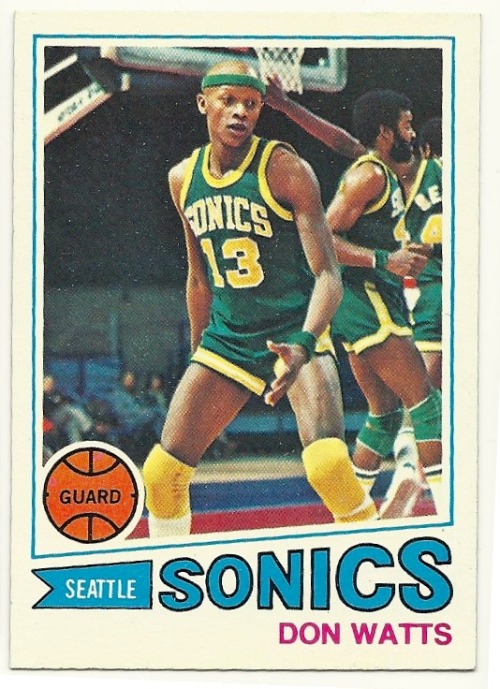
In his book Tales From the Seattle SuperSonics, Slick Watts (and co-auther Frank Hughes) go into great detail about Watts' sometimes-good, sometimes-not-so-good relationship with the great Bill Russell.
As Watts explains it, Russell tried as hard as he could to make the Sonics the Celtics of the West, going so far as to call Watts "KC Jones" and Fred Brown "Sam Jones," and so on. It was obvious to anyone observing the situation that Bill Russell thought that the Boston Celtic way was the right way. As Watts himself put it:
"When we played Boston, I thought Russell became the best coach in the world. For some reason, he prepared us well to play Boston. He said the game didn't mean anything to him, but for some reason we always played well. And he would come into the locker room pleased whenever we beat Boston."
Entering the 1974-75 season, the Sonics had existed for nearly a decade and had yet to reach the playoffs. The Celtics, meanwhile, had a vacation home in the NBA Finals and were the defending NBA Champions. Featuring John Havlicek, Dave Cowens, Paul Silas, Jo Jo White, Paul Westphal, and others, they were in another universe when compared to the Sonics.
And so it was, that on Feb. 19, 1975, the Sonics played host to the Celtics. At 27-31, the Sonics were coming off a surprising win over the Lakers the previous night, but they still figured to be no match for the 41-17 Celtics - a team that had won 11 in a row earlier in the month, and had won 22 of their previous 25 games on the year. Clearly, anyone could see that the Sonics were being prepped for the slaughterhouse.
Anyone, that is, except Bill Russell.
Who knows what Russ told his young team before the game started. Perhaps he threw up in a bucket; maybe he threatened them with a baseball bat. Whatever it was ... it didn't work.
(See what I did there?)
Seriously, after one period of play, the Celtics were rolling, leading the Sonics by a comfortable 33-19 margin en route to another win.
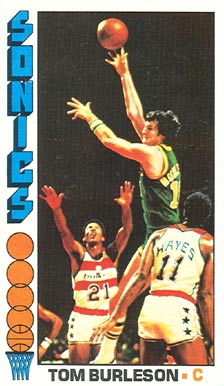
Somehow, though, the Sonics came alive. Buoyed by a standout performance from big man Tom Burleson (who would go on to score a career high 28 points on the night), Seattle roared back to take a 4-point halftime lead - helped in no small part by a 17-0 run during the quarter - then build upon that with a ridiculous 35-14 edge in the third quarter on the way to a 26-point win over the defending NBA Champion Boston Celtics!
"They smoked us." Boston Coach Tom Heinsohn told the AP. "It was their night."
Even the noted begrudger of popular sentiment, Bill Russell, had to concur. "It might be our best game of the year," Russell said afterwards, while no doubt dancing a jig on the inside.
Stranger still, Russell had used an incredible four rookies - Burleson, Rod Derline, Tal Skinner, Leonard Gray - and a second-year player (Watts) for a large portion of the second half.
It was a remarkable performance, and a turning point in the season for the green and gold. 27-31 entering play that Wednesday night, the Sonics caught fire and went 16-8 the rest of the way, including a 7-game win streak to close the season. The momentum carried into the playoffs, where they knocked off the Pistons in Seattle's inaugural playoff appearance, and took a 2-2 split before losing to eventual NBA Champion Golden State in the second round.
Box Score via NBA.com
As Watts explains it, Russell tried as hard as he could to make the Sonics the Celtics of the West, going so far as to call Watts "KC Jones" and Fred Brown "Sam Jones," and so on. It was obvious to anyone observing the situation that Bill Russell thought that the Boston Celtic way was the right way. As Watts himself put it:
"When we played Boston, I thought Russell became the best coach in the world. For some reason, he prepared us well to play Boston. He said the game didn't mean anything to him, but for some reason we always played well. And he would come into the locker room pleased whenever we beat Boston."
Entering the 1974-75 season, the Sonics had existed for nearly a decade and had yet to reach the playoffs. The Celtics, meanwhile, had a vacation home in the NBA Finals and were the defending NBA Champions. Featuring John Havlicek, Dave Cowens, Paul Silas, Jo Jo White, Paul Westphal, and others, they were in another universe when compared to the Sonics.
And so it was, that on Feb. 19, 1975, the Sonics played host to the Celtics. At 27-31, the Sonics were coming off a surprising win over the Lakers the previous night, but they still figured to be no match for the 41-17 Celtics - a team that had won 11 in a row earlier in the month, and had won 22 of their previous 25 games on the year. Clearly, anyone could see that the Sonics were being prepped for the slaughterhouse.
Anyone, that is, except Bill Russell.
Who knows what Russ told his young team before the game started. Perhaps he threw up in a bucket; maybe he threatened them with a baseball bat. Whatever it was ... it didn't work.
(See what I did there?)
Seriously, after one period of play, the Celtics were rolling, leading the Sonics by a comfortable 33-19 margin en route to another win.Somehow, though, the Sonics came alive. Buoyed by a standout performance from big man Tom Burleson (who would go on to score a career high 28 points on the night), Seattle roared back to take a 4-point halftime lead - helped in no small part by a 17-0 run during the quarter - then build upon that with a ridiculous 35-14 edge in the third quarter on the way to a 26-point win over the defending NBA Champion Boston Celtics!
"They smoked us." Boston Coach Tom Heinsohn told the AP. "It was their night."
Even the noted begrudger of popular sentiment, Bill Russell, had to concur. "It might be our best game of the year," Russell said afterwards, while no doubt dancing a jig on the inside.
Stranger still, Russell had used an incredible four rookies - Burleson, Rod Derline, Tal Skinner, Leonard Gray - and a second-year player (Watts) for a large portion of the second half.
It was a remarkable performance, and a turning point in the season for the green and gold. 27-31 entering play that Wednesday night, the Sonics caught fire and went 16-8 the rest of the way, including a 7-game win streak to close the season. The momentum carried into the playoffs, where they knocked off the Pistons in Seattle's inaugural playoff appearance, and took a 2-2 split before losing to eventual NBA Champion Golden State in the second round.
Box Score via NBA.com
Monday, February 18
This Date in Sonic History: Feb. 18, 1977, Slick Watts Goes Off
The 1976-77 season was one of the more unusual in the team's history - featuring the end of the line for both Hall of Fame Coach Bill Russell and popular point guard Slick Watts.
Unlike Russell, Watts wouldn't leave the team until the next season, but his future in Seattle took a inauspicious turn on Friday, February 18, 1977 when he unloaded his frustration about a perceived lack of fair compensation to the local media.
The Sonics were on the road that Friday, and while the on-court results were positive (Slick led the club with 19 points in a win over the New York Nets), Watts used the opportunity to explain that he wanted to be traded - and, boy the Nets and Tiny Archibald sure looked like a great place.
"I've got to get what I'm worth," Watts told a reporter. "I play hard and I do the dirty work and for doin' the dirty work I want to get compensated.... There's seven players on the Sonics makin' more money than I do."
It's easy in 2013 to underestimate how popular Watts was in Seattle in the mid-1970s. Prior to the arrival of the Seahawks and Mariners, Sonic basketball was the only professional entity in the state, and Watts - with his exuberant personality, cocked headband, and exciting play - was the most famous player on the roster. With hundreds of personal appearances a year, Watts was the Sonics.
And yet, his salary didn't reflect it. At $90,000 a year, Watts was making less than such players as Tom Burleson ($310,000), Fred Brown ($200,000) and - worse - Frank Oleynick ($100,000).
When Watts injured his knee during the season he suddenly became aware of his basketball mortality, and how close he was to going from Slick Watts, Basketball Player, to Slick Watts, Insurance Salesman. With that in his head, it didn't take much for Watts to spill his guts to PI reporter Blaine Johnson.
Watts' comments didn't help matters. His new contract - which he hoped would earn him in excess of $200,000 year - never came off, and Watts wound up being dealt to New Orleans for a first round draft choice in the fall of 1977. It was a shocking transformation for the poster boy of Seattle basketball.
Feb. 18, 1977 - the beginning of the end of the Slick Watts Era.
Unlike Russell, Watts wouldn't leave the team until the next season, but his future in Seattle took a inauspicious turn on Friday, February 18, 1977 when he unloaded his frustration about a perceived lack of fair compensation to the local media.
The Sonics were on the road that Friday, and while the on-court results were positive (Slick led the club with 19 points in a win over the New York Nets), Watts used the opportunity to explain that he wanted to be traded - and, boy the Nets and Tiny Archibald sure looked like a great place.
"I've got to get what I'm worth," Watts told a reporter. "I play hard and I do the dirty work and for doin' the dirty work I want to get compensated.... There's seven players on the Sonics makin' more money than I do."
It's easy in 2013 to underestimate how popular Watts was in Seattle in the mid-1970s. Prior to the arrival of the Seahawks and Mariners, Sonic basketball was the only professional entity in the state, and Watts - with his exuberant personality, cocked headband, and exciting play - was the most famous player on the roster. With hundreds of personal appearances a year, Watts was the Sonics.And yet, his salary didn't reflect it. At $90,000 a year, Watts was making less than such players as Tom Burleson ($310,000), Fred Brown ($200,000) and - worse - Frank Oleynick ($100,000).
When Watts injured his knee during the season he suddenly became aware of his basketball mortality, and how close he was to going from Slick Watts, Basketball Player, to Slick Watts, Insurance Salesman. With that in his head, it didn't take much for Watts to spill his guts to PI reporter Blaine Johnson.
Watts' comments didn't help matters. His new contract - which he hoped would earn him in excess of $200,000 year - never came off, and Watts wound up being dealt to New Orleans for a first round draft choice in the fall of 1977. It was a shocking transformation for the poster boy of Seattle basketball.
Feb. 18, 1977 - the beginning of the end of the Slick Watts Era.
Saturday, February 16
Terence Stansbury
Friday, February 15
This Date in Sonic History: Feb. 15, 1991
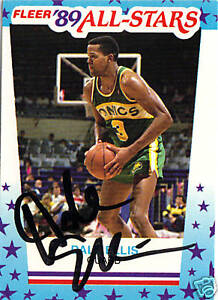
22 years ago today, the Sonics and the Milwaukee Bucks did what all teams do when they have disagreeable superstars – they swapped them.
And so it was that Ricky Pierce and Dale Ellis – two of the
shootin’-est shooting guards in NBA history – wound up trading uniforms on
February 15, 1991 in a straight-up, no-blinking trade that seemed more at home
in a fantasy league than in a real one.
The reasons for the trade were, naturally, both financial
and emotional. Per The
Seattle Times, Ellis had become dissatisfied with his usage under new coach
KC Jones, while Pierce was frustrated with Milwaukee’s foot-dragging in
contract negotiations.
(Want to feel old? Try this on for size – Pierce’s deal was
for $1 million a year. He was looking for something north of $2 million.).
With the benefit of hindsight, we can attempt to figure out
who won the deal.
Oddly, even though I’ve always assumed the opposite, Pierce
wasn’t that much older than Ellis (perhaps it’s because Ricky Pierce was already
31 when he was born). In any event, neither player wound up lasting too long in
their new homes. By 1992, Ellis had been dealt to San Antonio, while Pierce
lasted until 1994 before being traded to Golden State. Pierce – famously –
bickered with new star Gary Payton during the infamous Denver Nugget Debacle in
the 1994 playoffs, a not insignificant coincidence with his trade later that
summer.
The two subsequent moves offer one opportunity to judge how
the players turned out post-trade. Here’s how they worked out:
To San Antonio: Dale Ellis
To Milwaukee: Tracy Murray (a first round pick that year
with the 18th overall selection)
To Golden State: Ricky Pierce, Carlos Rogers, 2 2nd
rounders
To Seattle: Sarunas Marciulionis, Byron Houston
It’s difficult to say who’s valuation was higher. Sarunas
was coming off consecutive 17+ ppg seasons, but Rogers was an 11th
overall pick that helped to sweeten the deal.
Statistically speaking, both players enjoyed long and
productive careers, with Ellis even returning to Seattle nearly a decade later
(and leading the league in 3-point percentage at the ripe old age of 37!).
Post-Trade Win Shares
Ellis: 42
Pierce: 29.6
Post-Trade PER
Ellis: 142.7
Pierce: 132.6
Ellis gets a slight edge, but a chunk of that gets erased by
the fact he played an extra season relative to Pierce. In all honesty, both
players contributed at high levels immediately after the trade, and while Ellis’
numbers were slightly higher, that could be balanced by the fact Pierce started
more playoff games in one season (1993) than Ellis did in the entirety of his
post-trade career.
Clear winner? None.
Payton, Haywood Among Finalists for HOF
![]() |
| Spencer Haywood and Gary Payton: Coming soon to Springfield? |
Gary Payton and Spencer Haywood - arguably the two greatest players in Seattle Sonic history - are among the 12 North American finalists for basketball's greatest honor, the Basketball Hall of Fame announced today.
While not a foregone conclusion, it seems extraordinarily likely Payton will make the cut this year (to clarify, today's announcement only reveals the 12 final nominees; the ultimate inductees will not be revealed until April 8th, prior to the NCAA Men's National Championship Game). As measured by Basketball Reference's Win Shares, Payton is the 26th greatest player in league history - and all those above him are either in the Hall or not yet eligible. Interestingly, another nominee, Maurice Cheeks, ranks almost identical to Payton in Win Shares per 48 minutes. That is countered, obviously, by the fact Payton played more than 13,000 more minutes in his career than Cheeks, participated in more than twice as many All-Star Games, and was routinely either a first- or second-team All-NBA recipient, awards Cheeks never saw in his marvelous career.
So, let's assume The Glove coasts in (and won't that be a fantastic acceptance speech!). How about Haywood?
We've covered Spencer's candidacy in the past, and, ultimately, it comes down to one question: Does Spencer Haywood's legal embroglio with the NBA and his defiance of the league's antiquated 4-years-of-college restriction lift his otherwise slightly less than qualified bona fides to the level of Hall of Famer?
My answer is no, and I think the committee's answer is no. With that said, I've reached the point where I almost wish they'd let the big fella in. Is he the best eligible player not residing in the Hall? Definitely not (in fact, I'd argue that he's not even the best eligible Sonic in, so long as Jack Sikma is paying his way into Springfield).
Regardless, this annual dance has got to be incredibly painful for Haywood. It's undeniable that the former ABA MVP has spent his life with a considerable chip on his shoulder, and you couldn't blame him for feeling like the NBA has it in for him. Nothing feeds a conspiracy theorist's appetite like exclusion, and the Hall's continued is-he or isn't-he dance with Haywood would drive even the calmest personality to more than a bit of anger.
I don't know what the Hall's policy is on nominational time limits (and, honestly, I don't care to spend six hours demystifying the most mystical of institutions), but perhaps it's time for the Hall to either fish or cut bait with Spencer Haywood.
Induct him or don't induct him - but put the man out of his misery.
(Photo via Spencer Haywood's: twitter.com/spencerhaywood)
Thursday, February 14
More like SupersonicsSEXY! Am I right?
So our vintage obscure Seattle Supersonics valentines weren't romantic enough for you, eh? Well here's something for that will knock your green yellow socks off: The official website of former Sonic and eternal heartthrob Jim Farmer, who apparently is now some sort of model and/or country singer. Warning: his manliness may melt your computer screen, so watch out!
(To read more about Jim "Fabio" Farmer, check out Pete's excellent "Where Are They Now" series from 2008.)
Subscribe to:
Comments (Atom)