Thursday, April 9

40

Among the players to have worn #40 in a Sonics jersey:

Shawn Kemp - Which, of course, you already knew.

James Donaldson - Who will, possibly, be the next mayor of Seattle.

Gar Heard - Former Sonic who became known as the coach of one of the worst teams in NBA history, the '92-'93 Mavericks, as well as for his famous desperation shot in the NBA Finals while with the Suns.

Dave Corzine - Nothing famous about Corzine, although his nickname of "Lumber" was certainly apt.

Joe Forte - A miserable career with the Sonics, during which he became more renowned for his off-court troubles than his on-court production. The fact the Sonics allowed someone to wear this number after Kemp left is an unspeakable disgrace.

Tim McCormick - Now a TV analyst for the Big 10 Network, McCormick combined the grace of Dave Corzine with the fluidity of Alton Lister.

Russ Schoene - His forgettable career will no doubt pale in comparison to the notoriety he will receive from Kevin Pelton's SCHOENE projection system.

Mike Bantom - Little known in Sonic history, Bantom has gone on to become the NBA's Senior Vice President of Player Development.

Marvin Webster - RIP.

John Brisker - A fantastic, albeit fiery, player, Brisker disappeared in Uganda in 1978. Was he killed by a firing squad bent on vengeance against Idi Amin's regime? Is he still alive? It's really anyone's guess.

So there you have it. A famed shot-blocker now gone, a top NBA executive, a man-child whose face graced posters across the country, the name of a top statistician's projection system, a possible future mayor, and a man (maybe) killed in the jungles of Africa.

If nothing else, it's certainly an interesting group.

No, That's Probably Not It At All

Am I the only one who, on reading this headline at CNN.com

Somali women flocking to port in hope of marrying pirates

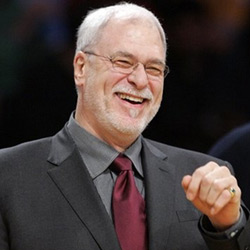
Immediately thought of this guy?


Sene to Knicks

Fans of the Sonics might be interested to know that former lottery pick Mo Sene has signed a contract with the New York Knicks. Sene was waived by the Sonix on February 19th, and has spent part of this season with Albuquerque of the Developmental League.

More on Marvin Webster

Two more well-written stories about the late Marvin Webster appeared today, and both are well worth the time to read.

The first comes from the great Harvey Araton at the New York Times. Especially moving is this snippet:

At the time, I was the Knicks beat reporter for The New York Post. To celebrate, in part, and to interview him for an article, I took him to lunch in Chinatown. He mostly wanted to talk about his son, who, he said, would play in the N.B.A., just like him.

The second comes from Ken Murray, at the Baltimore Sun. Murray's story explores the lives that Webster touched as a collegiate star for Morgan State University, and how tragedy seemed to find him far too often. Murray also lets us know that Marvin's father, Edward Webster, passed away in February, which could not have helped the son's mental state any.

I can't help but feel for Marvin's mother, who is still alive. She's already lost a teenaged grandchild more than a decade ago, and now, within the span of two months, she's lost her husband and her son. Time may heal all wounds, but don't try telling Dorothy Webster that this Easter.

Wednesday, April 8

Marvin Webster Dies at Age 56

Marvin Webster, RIPMarvin Webster - whose marvelous shot-blocking skills earned him the 70's-tastic nickname "The Human Eraser" - has passed away at age 56. (Reports here and here).

Webster, the uncle of Portland's Martell Webster (turns out that information, despite being reported in multiple locations is untrue), was found dead in his Tulsa hotel room early Saturday morning. Police said that foul play is not suspected, and that Webster's passing was likely health related.

Though the 7'1" center was an overlooked part of Sonics history, his lone season in Seattle was an exceptional one, especially when one considers his playoff numbers. Webster averaged 16 points, 13 rebounds and nearly 3 blocks a game over the course of 22 playoff contests, leading the Sonics to their inaugural appearance in the NBA Finals. While that series ended in a Game 7 loss to the Washington Bullets, it appeared as though the rain clouds hovering over the franchise were a thing of the past. Unfortunately, at the end of the season, Webster and Sonics owner Sam Schulman failed to reach a consensus on his contract demands, and the budding young star bid Seattle farewell and signed a lucrative (well, lucrative in 1978 NBA dollars) deal with the Knicks.

For a variety of reasons, Marvin Webster faded from the memory of Sonic fans, but for one brief season, he was an essential part of a fantastic team. How instrumental? Well, an article from the Wages of Wins Journal estimates that Webster contributed 15.7 win shares to the Sonics in 1977-78, nearly twice as many as the closest Sonic (that would be Gus Williams).

In a very sad way, though, Webster's career - and life - seems to have peaked at that moment in 1978, a fact he reflected upon later.

"I remember the locker room after the final game—how the champagne was on ice, guys with tears in their eyes," Webster told Sports Illustrated. "I loved being on that team. I had no idea I'd be gone so shortly."

As a young man who had led a team nearly single-handedly to the NBA Finals, and one of the top centers in the league, Webster had no trouble finding suitors, and he inked a five-year deal with the Knicks, seemingly poised for superstardom. The son of a Baptist preacher, Webster surely must have thought his prayers had been answered.

Instead, tendinitis and hepatitis (the latter an affliction he had suffered as a standout player in college) struck Webster down, and he never fully recovered. With health issues dogging him at every turn, the big man's life spiraled downward, resulting in bouts with depression and eventual departure from the league.

Divorce eventually followed, forcing Webster's son, Marvin Jr., to be raised by his maternal grandparents. But that wouldn't be the end of Marvin Sr.'s disappointments, as his son - a 6'11" center - enrolled as a prize recruit at Temple University, then died of a heart attack as a sophomore before ever playing a game.

It was a crippling blow to the now-retired Webster. Beset by all of this pain, and his failing health now further complicated by diabetes, you have to imagine that in the last decade of his life, Webster must have endlessly wondered how it all went wrong. It's an achingly painful story, one which ends with a former basketball star dying, alone, in the bathtub of a Tulsa hotel.

There are dozens of beautiful basketball stories, of players who overcame adversity to achieve greatness, of coaches and parents who give selflessly to help young men and women. It is those stories which draw us into the comforting life of a sports fan, and they sustain us when people such as David Stern and Clay Bennett stick their noses into our entertainment.

But the lying in wait on the flip side of those heartwarming stories are the stories of such men as Marvin Webster. Webster watched his career disappear, watched his marriage evaporate, watched his son die as a college sophomore, and then watched his health deteriorate to the point he died before reaching the age of 60.

In that same SI article, Webster mentioned Marvin Jr., who at that point was about to enroll at Temple. "They call him Eraser Jr.," Webster said. "One day he calls me up, says, 'Dad, everybody here knows who you are.' I smiled. Not all former athletes admit it, but I will. It's nice to be remembered."

Rest in peace, Marvin.

Tuesday, April 7

Roy Williams

Not sure where this fits in an NBA blog, but am I the only one who feels his skin crawl when Roy Williams smiles?

I really had little interest in this year's tournament (its boringness has been dissected elsewhere), but when Williams and UNC appeared on the screen Monday night, well, it was quite easy to find a rooting interest.

At one time, there were NBA coaches who generated that sort of animosity (this guy for one; maybe him; and this fella bugged a few people a decade ago, but not so much anymore), but that era has sort of ended, no? Of the 30 coaches working right now, is there anyone who gets people riled up?

Monday, April 6

Not Quite Right

Last year, a friend of mine recommended I read Daniel Yergin's "The Prize," an exhaustive study of the petroleum industry, from the 1800s to today. (How exhaustive? Try 928 pages.)

After slogging through the first quarter of the book, I came to Yergin's analysis of World War I, and how oil played a role in that horrific bloodbath. I was especially interested, in that I had spent the past year reading every book I could on WWI (don't ask; I get obsessed with weird topics sometimes).

Sadly, Yergin's focus on tanks and supply lines was totally out of whack with the facts, and it ruined the rest of the book for me. While previous to that point of the story I was swallowing everything he wrote, all subsequent chapters came with hesitation in my eyes. After all, if he could be so wrong about the section which I knew alot about, how wrong was he about the rest?

That's a rather long-winded reference to this piece from ESPN's Tom McKean at TrueHoop today. McKean compiles a list of teams that failed to win championships despite posting phenomenal regular season records over an extended period of time.

And, yes, your favorite basketball team is right there, sandwiched between the Blazers and the Knicks. I won't repeat everything McKean wrote (you should read the article in its entirety), but I will copy this portion:

In 1996, Seattle reached the NBA Finals, but fell to the Bulls in 6 games. During that era, to be the best, a team most likely had to go through Chicago, and the problem was that Seattle was 4-12 against the Bulls between 1991-98 when Michael Jordan played, including playoff games.

[emphasis added]

To which my astonished inner reader responded, "Uh, come again?" Is his contention that the reason the Sonics failed to win a championship during George Karl's tenure was Michael Jordan?

Think back to that time frame. When Wally Walker canned Karl, was it because he lost to the Bulls in the NBA Finals, or because the Sonics imploded in the first round so often? Obviously, it was the latter, right?

I don't mean to belittle McKean's article, and I'm sure he spent a considerable amount of time culling together candidates for the story, but, as I did when reading The Prize last year, I was left with a slightly bewildered and disappointed feeling after I read it. If he can be that wrong about a crucial element of the Sonics' failure, how wrong is he about the rest of the article?

Bird, Magic and the '79 Supersonics

1979. For Sonics fans, that means one thing: The Championship Year. For the rest of the basketball world, however, it also marks the beginning of the Bird/Magic era.

In the new book When March Went Mad: The Game That Transformed Basketball, author Seth Davis takes a look at the game that put basketball on the map: the 1979 NCAA championship match-up between the Michigan State Spartans and the Indiana State Sycamores.

The book starts out with a group of TV execs arguing about how to cover the big game. After some angry words, they finally agree to focus almost exclusively on the two stars of the game, Michigan State's Magic Johnson and Indiana State's Larry Bird. Unprecedented at the time, this kind of "superstar" promotion was soon picked up by the NBA (something David Stern is always quick to take credit for) and the rest, as they say, is history.

Davis does a great job of not only delving into the behind-the scenes shenanigans, but also taking a closer look at Bird and Magic during an era when few of us knew them.

In the book, Davis also mentions how in 1979 no one was paying attention to basketball, and even the NBA Finals were shown on tape-delay. Yes, the Sonics' only championship was relegated to the late-night realm of infomercials. Sigh.

Despite this depressing history lesson, When March Went Mad is a terrific book and highly recommended for hoop nerds of all ages.

Friday, April 3

No Hall for DJ

It's not entirely surprising, but Dennis Johnson was apprarently - again - denied entry to the Naismith Basketball Hall of Fame. (ESPN)

Luckily, C. Vivian Stringer, the Rutgers women's head coach, made it in. You know, because it would be a shame if the coach of a team that couldn't beat the majority of varsity high school teams in the country was barred from receiving an honor from the association which honors the best basketball players and coaches in the world.

No word yet on if Don Imus will introduce Stringer.

Sonix Curse


Monica Guzman of the PI with the story of Barry Hayes, a former Sonic season-ticket holder who placed a curse on the Sonix, and now believes it has something to do with the the team's (and, perhaps, the ownership's) poor performance in the past six months.

Cue overly defensive comments from Oklahoma residents in three ... two ...

Wednesday, April 1

Shawn Kemp running for Governor

At a surprise press conference Wednesday, former Seattle Supersonic Shawn Kemp announced his intention to run for Governor of Washington state.

"I figured if that Donaldson dude could run for mayor, I could easily be Governor," explained Kemp. "I mean, that guy was 7-2 and could barely dunk! I'm the Reign-Man, (expletive)!"

Despite being a five-time All-Star, Kemp is a political unknown. When pressed on his policies, Kemp summed up his views in two words:

"Legalize it. Seriously, why are we still putting people in jail for pot? Do you know how much tax revenue this country could bring in from the Trailblazers alone?"

Kemp, who spent the past decade battling weight, drug and alcohol problems while attempting a prolonged comeback to the NBA, has not ruled out a return to basketball.

"I've still got game. I just beat Patty Murray in a little one-on-one last week, and have no doubt I'm up to the task of dunking on Gregoire."

"Also, did you know that Donaldson was born in England? Seriously, what's up with that?"