Tuesday, March 12

Too Big To Fail: Why the Seattle Supersonics and Sacramento Kings both deserve to live


Things are getting ugly between basketball fans in Seattle and Sacramento.

After the latest fold in the Kings Drama last week, my Twitter feed was filled with one common hashtag: #eatshitseattle .

Oooooookay?  I know this sort of situation brings out the worst in sports fans, but the Über trolls on both sides have smelled blood and are engaged in a battle to the virtual death, bringing back painful memories of 2008 and the horde of OKC enthusiasts who came out in droves to piss on Seattle's basketball grave.

The irony, of course, is that fans have zero influence on the outcome of these sorts of dilemas, so while we bludgeon each other with zingers and hashtags, the NBA fatcats count their money and enjoy the show.

Instead of fighting each other, we should acknowledge that both cities have incredibly enthusiastic fans and, more importantly, incredibly rich investors begging to give the NBA boatloads of money. So why should either city be left out in the cold? Why not keep the Kings in Sacramento and award an expansion team to Seattle?

People will argue that expansion will dilute the league, but with the explosion of international basketball over the past two decades, there has never been a bigger pool for talent. Naysayers also protest the idea of the NBA having an uneven amount of teams, but as Tom Ziller brilliantly pointed out in detail back in January, the league has often operated that way and somehow survived.

The only reason the NBA hasn't fixed this mess is they love drama.  It drives ratings, ticket sales and fan interest. And as we fight online crusades against imaginary foes from other cities, it's clear this whole kerfuffle is as authentic as the WWE, with the Board of Governors Meeting on April 18th being our Wrestlemania.

Basketball fans on both sides need to stop fighting each other and acknowledge we are all being exploited. The NBA could end this right now by awarding Seattle an expansion team. The only question is whether David Stern wants to play the hero or the heel.


Monday, March 11

Hansen to start Seattle Sonics season tickets waitlist Thursday, apparently doesn't know meaning of "Jinx"


Well, that didn't take long.

With the ground still warm from David Stern's bombshell Friday, Seattle Supersonics 2.0 mastermind Chris Hansen is launching a "Priority Ticket Waitlist for future Sonics tickets" this Thursday through Sonicsarena.com.

In addition to helping us understand and prioritize the demand for tickets, registering your interest will be a critical step in demonstrating to the NBA and basketball fans around the country the unbelievable passion that exists in the Emerald City to BRING BACK OUR SONICS! 
The Priority Ticket Waitlist will go live here at SonicsArena.com on March 14 at 10 am SST (Sonics-Saving Time!). You will also be able to go to the list directly here. Requests will be taken in sequential order for each ticket type.

So, who's going to sign up for imaginary season tickets? I'm tempted to, but I'm also reminded of the last time the Sonics tried to sell tickets for an arena that wasn't built yet.

Aw, who am I kidding? I'm totally signing up.

Wednesday, March 6

Seattle Sonics History: 3/6/87, Lenny's Brother Gets Fired


We’re all familiar with the famous Seinfeld episode wherein Elaine Benes is kicked out of Yankee Stadium for wearing a Baltimore Orioles cap (she was in the owner’s box at the time), but did you know a very similar event happened at a Sonics’ game, and that it involved the brother of perhaps the most important figure in Seattle Sonic history?

It was March 2, 1987, and the Sonics were taking on the Cleveland Cavaliers in a battle of not-exactly-titans. However, it was a big game in that Lenny Wilkens was back in town, this time as the coach of the Cavs, and the Sonics were honoring their former coach and player by putting his number in the rafters, a classy move by the organization, to be sure.

(It should be noted that numerous newspaper reports indicated that the Sonics retired Wilkens’ jersey; however, considering that even more reports indicate that the jersey was retired in 1979, I’m not sure exactly what was put into the rafters that night).

One person in particular was thrilled by the night’s events – Lenny’s brother, Michael. Michael had been a statistician for the team for more than seven years, and remained in the employ of the team even after his brother left for Cleveland.

To honor Lenny, Michael thought it might be a good idea to wear a Cleveland cap during the game. Just a heartfelt tip of the, well, cap to his famous brother. No harm, right?

Michael obviously forgot who was running the Sonics. You see, Barry Ackerley had bought the club, and while former owner Sam Schulman would have just chuckled at seeing one of his employees wearing a cap of an opposing team (heck, Schulman probably would have tried to sell Cavs’ hats in the arena if he could make a buck off it), Barry Ackerley was most definitely not Sam Schulman.

Which is why, after halftime, Bill Ackerley, Barry’s son and the team’s Vice President, approached Michael and asked him to remove the cap.

Michael, thinking that the Wilkens family had done enough for the team to allow him a smidge of leeway, told Bill, thanks, but I think I’ll keep my hat on.

Bill, realizing that it wasn’t in his best interests to create a scene, retreated after a bit of debate.

And then fired Michael the next day.

Better yet, Ackerley claimed that he didn’t know that Michael was Lenny’s brother. I’m not sure what’s worse, that the team’s Vice President didn’t know that a seven-year employee was the brother of the most famous person to ever don a Sonic jersey (to that point, anyway), or that Ackerley was taking the exact opposite tack of every white person in history in not thinking that two black men didn’t look similar to one another.

Whatever the case may be, on March 6, 1987, newspapers across the country ran stories about how the Sonics had fired Lenny Wilkens’ brother for wearing a Cleveland Cavaliers cap.

Classy.

Tuesday, March 5

This Date in Seattle Sonics History: 3/5/72, Spencer v Puddle

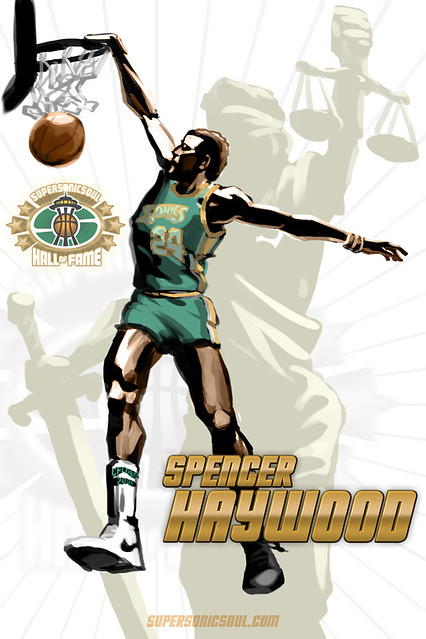
41 years ago today, Spencer Haywood was probably thinking about how he would celebrate the upcoming anniversary of his successful lawsuit against the NBA. Maybe he was thinking about some jazz music in his beautiful apartment overlooking Downtown Seattle, or having a few friends over, some good food, or perhaps just a toast to the fact that a young black man from the rural South had knocked off those high-priced NBA lawyers.

What he surely wasn’t thinking was how the unending Seattle rains were going to seriously screw up all that he had won in that contentious lawsuit.

It was Sunday, March 5, 1972. President Richard Nixon had just completed his historic trip to China and the Sonics were gearing up to cruise into the NBA Playoffs for the first time in the team’s history.  Entering play that Sunday the Sonics had won 12 of their last 14 games. They hadn’t lost at home in more than a month; their quest with Golden State for second spot in the Pacific Division was a tough one, but certainly attainable. With the dismal Atlanta Hawks in town the only question was whether the Sonics would use the opportunity to nudge Golden State aside.

As always, it was raining like crazy in Seattle (more than 20 inches of rain had fallen since the beginning of the year, and a torrential rain storm on Sunday didn’t help matters), and it was dripping again inside the Seattle Center Coliseum, but that’s just how it was in Seattle, right? Okay, they were starting to call the place “The Leaky Tepee” and “The World’s Largest Shower Bath,” but, after all, the city had spent north of $100,000 to caulk the 6,000 aluminum panels that made up the roof of the building, so it wasn’t that big of a deal, really.

Well, it became a big deal. A very big deal.

That Sunday was an especially leaky day at the tepee (so much so that no fewer than five ball boys were on hand to mop up the puddles), but as any Seattleite with a basement will tell you, there’s only so much you can do when you’re fighting water.

A mere six minutes into the first period Haywood was headed down the court on a fast break when his left foot and a massive puddle at half-court greeted one another. The result?

A stretched right medial collateral ligation in Haywood’s leg.

Amazingly, game reports glossed over Haywood’s injury. “Not expected to be serious,” the AP said, focusing more of its efforts on the broken ring finger of Sonic Captain Dick Snyder – suffered in a fall during the same game. More amazingly, the Sonics had beaten the Hawks, putting them into a tie with the Warriors for second place. Playoffs, here we come!

Two days later, though, the news was grim: Haywood was out for the season. Playoffs, there we go.

Suffice it to say the Sonics did not rebound well from seeing Haywood (26 ppg) and Snyder (16 ppg) sidelined. The Seattle dropped eight of their final nine games, putting them a full four games behind Golden State in the road to the playoffs.

Worse, the leak further poisoned the relationship between the city and the team. A week after the incident, the Sonics had filed a claim against Seattle for “gross negligence” in not repairing the leaky roof. Eventually, the Sonics and Haywood would enjoin to ask the city for more than $400,000 for the injury (roughly $280,000 for Spencer, $162,000 for the Supes), although the parties would settle for a lesser amount (according to one account, Haywood got about $50,000).

“After many requests and complaints about the leaks in the roof, which not only make the playing surface of the basketball floor unsafe but also brings great discomfort for our fans,” team owner Sam Schulman said in a statement. “I am very bitter that I find it is necessary to make an issue every time I need assistance from officials.”

A spokesman for the team even implied that the fiasco was causing the Sonics to think seriously about leaving the Coliseum, perhaps to that nifty domed facility the county was working on (something the team wound up doing just a few years later, before returning to the Coliseum in the 1980s, then onto KeyArena, then onto … I’ll just stop now).

Luckily for Spencer Haywood, the injury did not turn out to be career-ending. After finishing in the top five in scoring in 1971-72, Haywood returned the next year and averaged 29 points per game, earning him four votes for MVP and a top-ten finish in the voting, and 10.2 win shares, both of which would be career highs for him, certifying that while the injury may have hurt his health in the long run, it certainly didn’t hurt it in the short run.

(Information gathered from: Associated Press, The Great Book of Seattle Sports Lists, UPI, and The Rise, the Fall, The Recovery, by Spencer Haywood and Scott Ostler).

Friday, March 1

Classic T

Okay, now I'm pro-arena again.

I found this too late for the post earlier today, but it's worth its own post regardless. For $1, you can have this amazing t-shirt featuring Shawn Kemp, Gary Payton, Nate Mcmillan, Dana Barros, George Karl, Ricky Pierce, Eddie Johnson, and Derrick McKey - in animated form! View the complete listing here.

Let's Go Shoppin'

The best way to deal with overwhelming guilt, anxiety and uncertainty?

Go shopping!

At least, that’s what we’ve been taught since grade school, anyways. So, with that in mind, here’s some fantastic and not-so-fantastic items currently available to the discerning Sonic shopper.

Featuring Det, Reignman, and the Glove, it’s a classic piece of mid-90s nostalgia. At $15, it’s a decent deal for a 22” x 34” poster you know would look great in any rec room.


Oh, my. Just … I’m not sure what to say about this one. Set aside the value – it’s $50 for a warm-up jersey, so you can’t quibble too much about the price – but, that picture? Why that expression? Why do I get the feeling that the poser is a TrailBlazer fan that lost a bet? Why does he feel the need to show us all of his chins? And why is he looking at his feet in the reverse picture? What’s down there, Joe? Did you step in something? Or are you just wondering how you got to this point in your life?


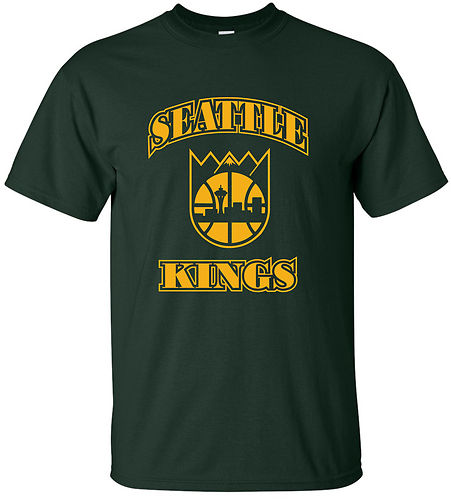
Sonic/Kings Jersey: Do not buy this
To the seller(s) of this piece of annoyance, on behalf of every citizen of Sacramento and Seattle, and anyone who has ever been a fan of either team: Go to Hell, just go. In all honesty,  can anyone fathom who the target market is for this obscenity? No one in Seattle or Sacramento would ever wear this in public, so I'm struggling to figure out who they expect to buy it.


So, you’ve got a corduroy hat signed by Michael Cage, Rich King, and a mystery Sonic. The question you’ve got to ask yourself: Would it be worth more if Rich King hadn’t signed it? And who is the mystery Sonic? Could it be Bart Kofoed? Would that make it worth even less than $10?


I sometimes wonder about the process that goes into making these staged photos. For example, in an ordinary circumstance with another set of three great NBA players, where none of the three is truly superior to the other two, you’d think there might be some awkwardness as to who gets to stand in the middle, right? I’m guessing this did not happen with Xavier McDaniel, Tom Chambes, and Dale Ellis:


Photog: Okay, who wants to stand in the middle?
Tom: Well, I’m the tallest, so how about me?
X: Looks at Tom.
Tom: Yeah, I think I’ll stand on the side.
Dale: Coughs.

Yes, it's from that game. The ticket doesn't say Game Five, but it does say Game C, which makes it painfully obvious that this is an unused ticket from the most horrific game in Sonic history. I think it's worth $5 just to buy it and perform an exorcism. Maybe you could get Dikembe Mutombo to perform part of the ceremony.

Thursday, February 28

Seattle City Council Approves 30-year Deal with Sonics

Got ya!

Actually, it's another in our series on This Date in Sonic History, and this time we're going back to 1988, an innocent time when million-dollar salaries were crazy talk, and tens of millions of dollars were plenty when you were talking arena construction.

And so it was on Monday, February 29, 1988 when the Seattle City Council approved a 30-year agreement with the Sonics for the construction of a new arena located a few blocks south of the Kingdome. The pact called for the city to contribute $1 million a year in admission taxes to go towards paying off the construction debt of the $45(!) million arena. The deal was contingent on the Sonics sticking around for all 30 of those years. At the time, the hope was that the arena would be ready for the 1991-92 season.

According to the UPI, the deal had been held up for a period of time due to some councilors' objection to the level of municipal involvement in the otherwise private project and because of the impact the new arena would have on the Coliseum (sound familiar, gang?), but that rancor was subdued when the terms were adjusted to be more favorable to the city should the Coliseum be forced to close its doors.

The arena, which was to hold between 18,000 and 19,000 fans (various reports had it pegged at various numbers), was, of course, never built, but the what ifs will ring in perpetuity. Ackerley claimed he would honor the 30-year agreement, and it's possible that he would have honored that promise, meaning the team would only now be looking at renovating the facility. Of course, America's cemeteries are full of dead arenas (Charlotte, Orlando, Cleveland, etc.) that were built in Bush the Elder's presidency, only to be rendered obsolete by the time his son took office. Is that what would have happened in Seattle, too?

Impossible to say, but worth thinking about on another cold winter day in Seattle.

(Gathered from here and here).

Wednesday, February 27

Whew!

The only good thing Seattle sports ever did, now on display at MOHAI

Don't worry guys, it's safe. But if you want to see the trophy for your 1979 NBA World Champion Seattle Supersonics, you can drool all over it at Seattle's new Museum of History & Industry

Tuesday, February 26

This Date in Seattle Sonics History: Feb. 26, 1978, Downtown is No. 1

Here's a trivia question you can use to stump your friends the next time you're hanging out at Oskar's:

Can you name the six players who have held the title as all-time leading scorer in Sonic history?

(Answer below. Also, a sidebar: Assume for the sake of brevity that the all-time leading scorer race commenced at the end of the inaugural 1968-69 season; otherwise, we wind up with a dozen guys from the first season jockeying for first place and it becomes a jumbled mess).

To help you in your decision-making, recall that on Feb. 26, 1978, Fred Brown became the leading scorer in Sonic history, passing Spencer Haywood's old record of 8,131 points. Brown tallied 32 points as the Sonics edged Philadelphia 99-97 in a come from behind victory.

Of note, Coach Lenny Wilkens was ejected for arguing with officials ("I guess I lost my head," the normally placid Wilkens said after the game), the first time in his career (playing and coaching) that he had ever received that dubious honor. Also of note, Philly Coach Billy Cunningham received the heave-ho as well.

Brown provided the winning score with 18 seconds left on the clock just as the 24-second clock was about to expire, helping the Sonics eliminate what had been a 16-point third quarter deficit. The Sixers had three chances to tie the game in the closing moments, but Doug Collins (!), Daryl Dawkins (!!), and Julius Erving (!!!) all came up short.

And now, in case you couldn't come up with the six, here's a handy-dandy graphic with all the details.


That's Walt Hazzard, Bob Rule, Lenny Wilkens, Spencer Haywood, Fred Brown, and Gary Payton, in case you couldn't gather from the photos.

Monday, February 25

Not on This Date in Seattle Sonics History, But Why Not

Everybody knows about Phil Jackson and his long-suffering back. But did you know that Jackson once missed game action because his back acted up on a bus ride from Seattle to Vancouver, BC?

I sure didn't, until I read this article in the Google news archives. In late December 1968, Jackson and the Knicks were en route from Seattle to Vancouver for a game with the Sonics (the two clubs met first in Seattle, then traveled by I-5 into Canada for a rematch the next day).

Apparently, the bus ride was too much for Jackson, sending him to the hospital (or, as they say in Canada, to hospital). It's worth noting that Jackson played in the Vancouver game, and in fact didn't miss any time until the middle of January, but his pain was enough to eventually sideline him for almost half of the 68/69 season.

I have no idea whether Jackson's now legendary back problems were around before the bus trip to Vancouver, but wouldn't it be something if that trip was what started the whole thing?

Friday, February 22

This Date in Seattle Supersonics History: Feb. 22, 1971, Spencer v NBA

It was 32 years ago today that Spencer Haywood went from the hardcourt to the Supreme Court, one of the biggest steps in his controversial and crucial case against professional basketball.

Haywood's case has been percolating for a long time, with lower courts initially affirming his right to play. This was affirmed by the 9th US Circuit Court of Appeals on January 26th, but on February 17th, NBA Commissioner Walter Kennedy ruled that Haywood's contract with the Sonics was invalid. Thus, on February 22nd, Haywood and his legal team filed a petition with the Supreme Court so that he could continue his livelihood as a professional basketball player.

It's difficult in hindsight to appreciate how much nonsense Haywood had to go through. He was simultaneously fighting:

A)  a lawsuit with the ABA's Denver Rockets, who claimed he was still under contract to them
B)  a lawsuit with the NBA about whether he had the right to play before his 'four years removed from high school' bit was up
C)  a petition to be able to play while (B) was being resolved

Oh, and he had to travel around the country appearing in different courthouses, as well as being physically ready to play professional basketball.

And he was all of 21 years old.

Eventually, the courts all wound up ruling in Haywood's favor, paving the way for Shawn Kemp, Moses Malone, etc. to play in the league. February 22, 1971, though, was a pivotal first step of that whole process.

(Also, it's Chunkstyle's birthday today, so join me in wishing the best artist I'll ever know a Happy Birthday. Still waiting on that Pulitzer, young man!)

Happy Birthday Dr. J


Happy birthday to the great Julius Erving. May you never lose that magic SPALDING TOUCH!!!

(Classic artwork by the equally great Jack Davis)

Thursday, February 21

This Date in Sonic History: Feb. 21, 2008: Throwing in the Towel

When I first heard about the Houston/Sacramento trade involving Thomas Robinson, I couldn't help but think of another trade involving a team expected to be relocating in the near future.

Yes, it was the Sonics, and yes, it involved Wally Szczerbiak, the rich man's Jim Farmer. (Face it, Paul, in a sexy-off between Wally World and Jim Farmer, the match would be over before the massage oils got fully warmed.)

It was February 21, 2008, and the Sonics were throwing valuables out the window at a cops-are-coming pace. The reader must remember that in mid-February 2008, the only decent offensive option for Seattle other than Kevin Durant was Szczerbiak, and by trading him the team was essentially saying that even though Szczerbiak's expiring contract was valuable, they were more interested in paring salary than anything else.

It was, of course, a logical choice to make, and one that only a team utterly disinterested in fielding a competitive team could make.

And so it was that the Sonics surrendered Szcerbiak and Delonte West and received in return, Ira Newble (!), Donyell Marshall (!!), and Adrian Griffin (!!!), who would, of course, go on to score a combined 24 points in the remainder of their collective careers.

The money quote came from Sam Presti (via USA Today), when he was asked whether the Sonics' owner's financial considerations were involved in the transaction:

"Absolutely not," Presti said. "Clay has been tremendously supportive of our decision making on the basketball side."

Wednesday, February 20

This Date in Sonic History: Feb. 20, 2003, The Glove Comes Off

Pro sports are littered with antagonistic relationships between ownership and players, and it often seems that the larger the ego for both, the greater the drama.

From Babe Ruth and Col. Jacob Ruppert to Reggie Jackson and George Steinbrenner, it doesn't take a team of researchers to find evidence of the phenomenon, and Seattle sports history is no different, and the best illustration of that difficult relationship came between two of the most important people in Sonic history: Gary Payton and Howard Schultz.

Payton - the brash point guard with the confidence of a thousand burglers - and Schultz - the self-made millionaire with the confidence of a thousand Tony Robbins - were, to say the least, not a match made in heaven. When Schultz bought the Sonics in 2001, he hoped to bring his brand of corporate branding to the NBA and his adopted hometown.

Unfortunately, Schultz never had to deal with a barista with the ego of Gary Payton.

By 2003 the marriage was a disaster. Payton's career was on the downswing, and his relationship with Schultz - if you could call it that - was even worse. Still, his popularity in the city was unparalleled in Sonic history. Even 10 years later, I can't think of a single Sonic who resonates with this town as much as Gary Payton.

When Payton boycotted the first day of training camp in protest of the lack of progress on his soon-to-be-expiring contract, the die had been cast. Still, Schultz and his management team (Rick Sund!) had, in their mind, no choice. Payton had to go. But where?

Suddenly, on February 20, 2003 - minutes before the trading deadline of 3 pm - Payton was heading to Milwaukee.

It was news that burst like a thunderclap over the Seattle sports horizon. Gary Payton ... a Buck? Even with the salve of the incoming Ray Allen to ease their pain, most Sonic fans were beyond angry at the betrayal by Schultz.

In hindsight, it was a great deal for the Sonics. Payton never reached the heights he had experienced in Seattle, and Allen was an amazing player during his tenure in Seattle.

It could be said that the beginning of the end of Sonic basketball came that grey day in February, 10 years ago. While Allen, Rashard Lewis, and company propelled the Sonics to the playoffs a few years later, the majority of his time in Seattle was mired in mediocrity, a mediocrity which helped to grease the wheels for the team's eventual departure to ...

Well, you know the rest of the story.